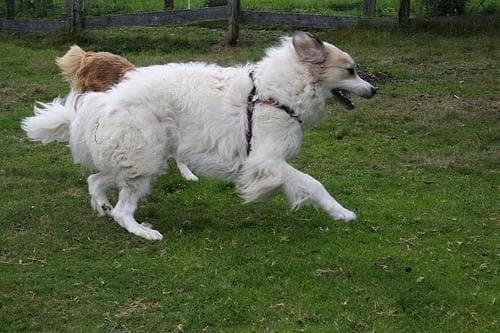
Already convinced? Skip the letter.
Get the Great Pyrenees Training System — $27Or keep reading to see why this works when everything else hasn't.
Picture this.
It's 7 AM. You clip the leash onto your majestic Pyr. You take one step out the front door.
And it begins.
Your Great Pyrenees starts barking all night at every sound, refusing to come when called, and escaping the yard to patrol the entire neighborhood.
Your shoulder aches. Your hand is raw from the leash. A neighbor walks by with their dog — heeling perfectly, no tension on the leash — and gives you that look.
That look. The one that says: “Why can't you control your dog?”
You love your majestic Pyr. You chose a Great Pyrenees because of their independent guardian instinct and calm stubbornness that makes them gentle protectors who follow their own agenda.
But right now? At 7:03 AM? With your coffee getting cold on the kitchen counter and your arm getting yanked out of its socket?
You're wondering if you made a mistake.
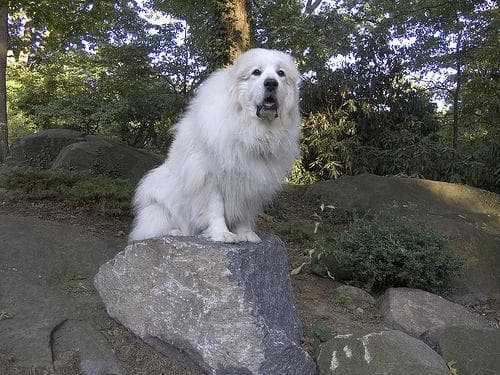
Great Pyrenees are incredible companions — when you know how to communicate with them.
Here's what nobody told you when you brought your Great Pyrenees home:
Great Pyrenees are not "easy to train" just because they are smart.
In fact, that deep devotion to their family and patient intelligence that responds to consistent, respectful leadership over time is exactly what makes them harder to train with generic methods.
A giant, low-moderate-energy breed like the Great Pyrenees processes the world differently than other dogs. Their brain is wired for independent guardian instinct and calm stubbornness that makes them gentle protectors who follow their own agenda — which means the cookie-cutter “sit, stay, treat” approach from YouTube trainers and $200/hour behaviorists doesn't just not work...
It actively teaches your Great Pyrenees to ignore you.
Think about it:
- ✕You say “come.” They look at you. Then they look at the squirrel. Squirrel wins.
- ✕You say “heel.” They heel for six steps. Then it's back to barking at every perceived threat and wandering — right back to the same behavior.
- ✕You try “positive only” training. It works indoors. Outside? Total chaos.
This isn't a training problem. This is a communication mismatch.
You're speaking English to a brain that processes the world through independent guardian instinct and calm stubbornness that makes them gentle protectors who follow their own agenda.
If you're like most Great Pyrenees owners, you've already tried:
YouTube videos.
Hours of “10 Easy Commands” content from trainers who've never worked with a Great Pyrenees in their life. Works great for the Border Collie in the video. Useless for your Great Pyrenees.
Group classes.
Forty-five minutes in a PetSmart with eight other dogs and an instructor reading from a script. Your Great Pyrenees spent the whole time trying to play with the Labrador in the next lane.
Private trainers.
$150 per session. Three sessions. $450 later, your Great Pyrenees behaves perfectly... when the trainer is there. The moment they leave? Back to barking at every perceived threat and wandering.
Online courses.
Generic “works for any breed” programs that treat a giant, low-moderate-energy Great Pyrenees the same as a Chihuahua. No wonder it didn't stick.
None of these failed because you did something wrong. They failed because they weren't built for a Great Pyrenees.
Here's what changes everything.
We built this system from practical breed-specific training patterns used by owners and trainers in everyday environments.
Not theory. Not textbook filler. Practical routines owners can use at home, on walks, and in high-distraction situations.
What they found was striking:
The same command, taught the same way, produces dramatically different results across breeds.
A Great Pyrenees responds best through deep devotion to their family and patient intelligence that responds to consistent, respectful leadership over time. A Golden Retriever needs food motivation and short, enthusiastic sessions. A German Shepherd needs structured authority and longer repetition cycles. A Beagle requires scent-based engagement that most trainers have never even heard of.
The data was clear: breed-specific training isn't a nice-to-have. It's the only approach that produces lasting behavioral change.
That research became the foundation of what we now call:
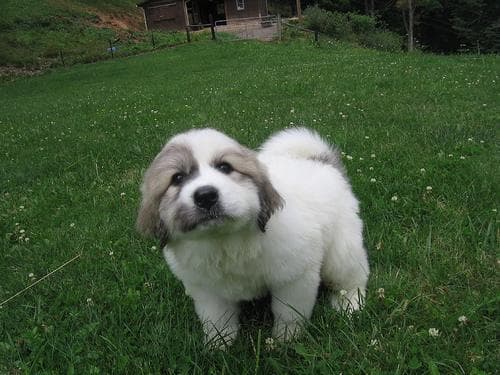
For Great Pyrenees Owners
Every technique, every command sequence, and every troubleshooting guide in this system was developed specifically for Great Pyrenees.